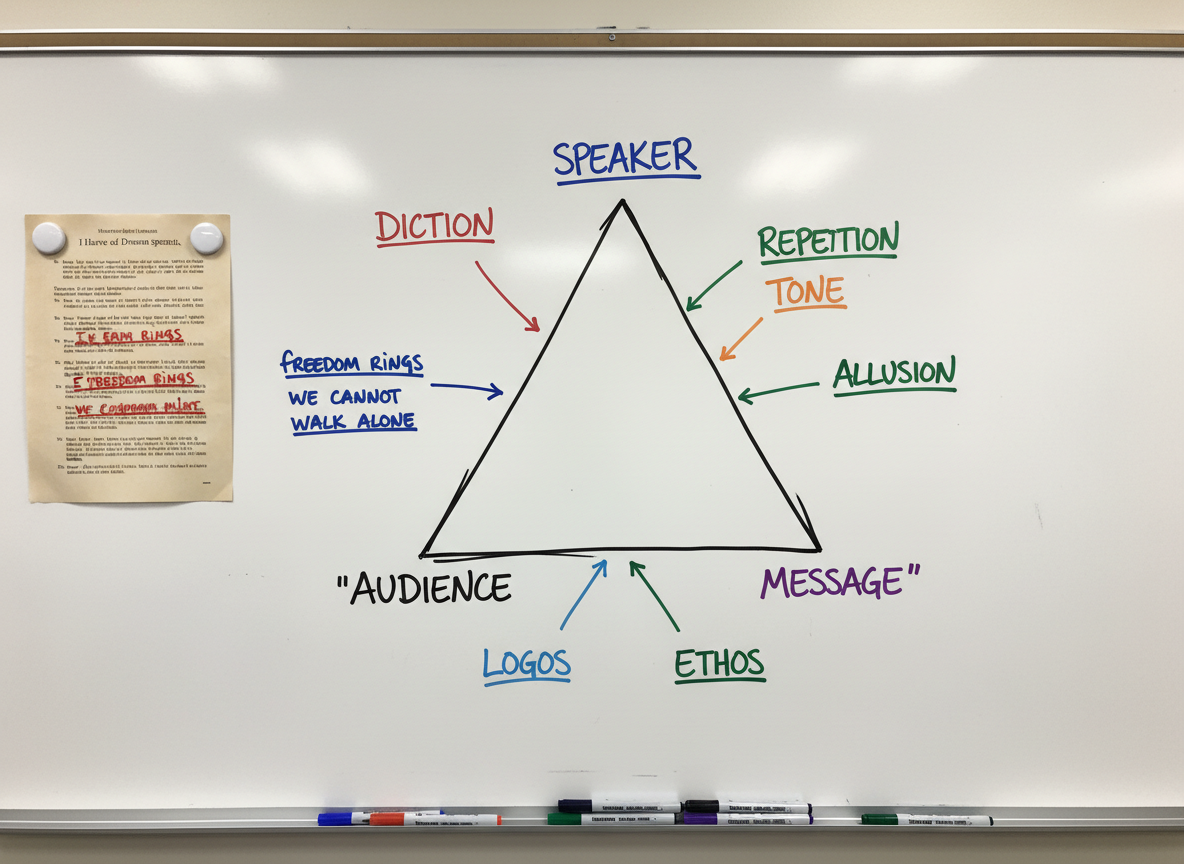
A polished whiteboard in a secondary ELA classroom filled with a carefully drawn rhetorical analysis of a famous speech. A printed transcript is magnetically attached to one side, with key lines underlined in red and blue. On the board, a large, neatly sketched rhetorical triangle labeled “speaker,” “audience,” and “message” is surrounded by clearly written terms like “diction,” “tone,” “repetition,” and “allusion,” each in different marker colors. Fresh dry-erase markers rest in a tray below. Soft overhead classroom lighting creates even, neutral illumination with minimal reflections. Photographic realism, eye-level composition, and a professional, academic mood highlight clarity and structure without visual clutter.

Rhetoric Lessons

Bring iconic speeches into your classroom with ready-to-teach activities for every secondary ELA unit.

Resources
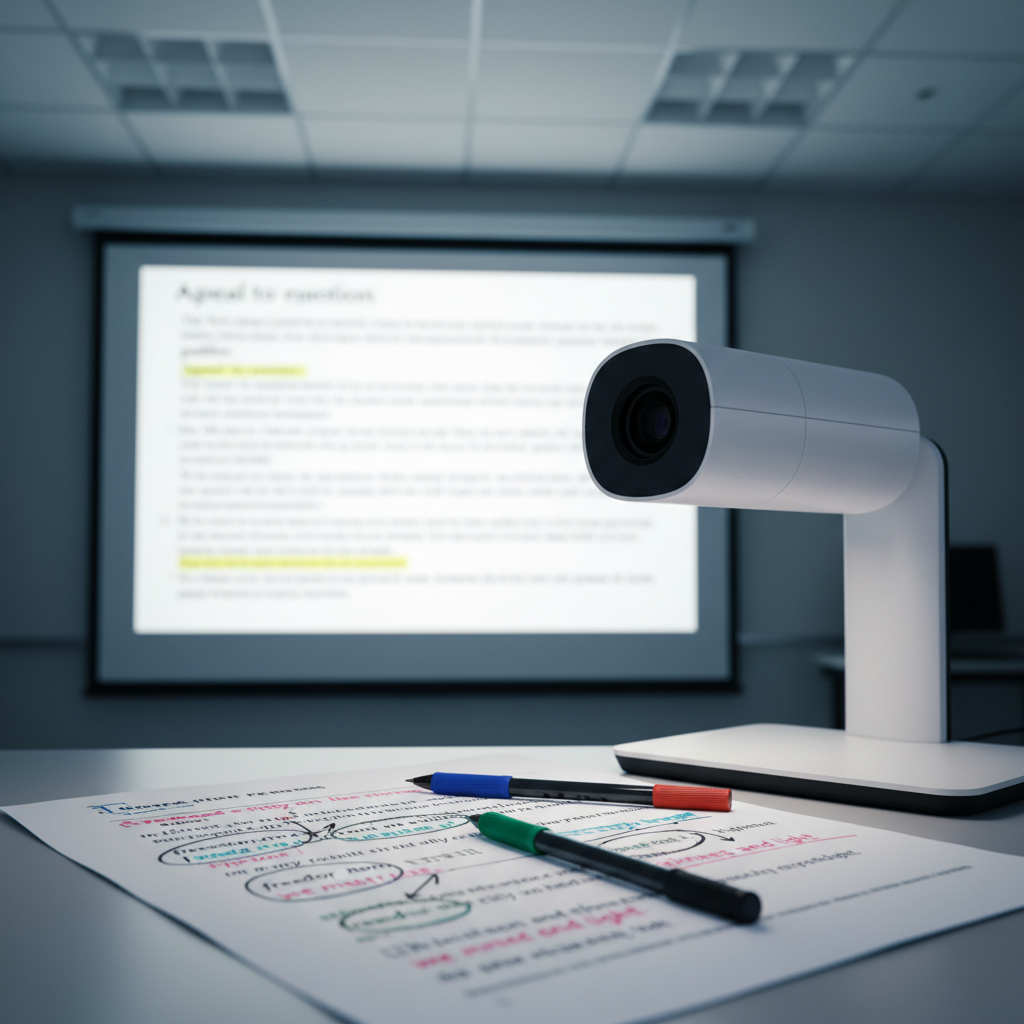
A classroom document camera station set up to model close reading of a speech. Under the camera, a printed speech transcript is annotated with multi-colored pens, circles around repeated phrases and arrows pointing to examples of imagery and contrast. On the connected projector screen in the background, the enlarged text shows highlighted lines and marginal notes like “appeal to emotion” and “call to action.” The room is lit with balanced overhead fluorescent lighting, producing clear, even illumination without harsh shadows. Photographic realism at a slight three-quarter angle, with the document in sharp focus and the projected screen softly blurred, creating a professional, instructional mood.

Mini-lessons, close reads, Socratic seminars, and scaffolded writing tasks built around powerful speeches for grades 6–12.
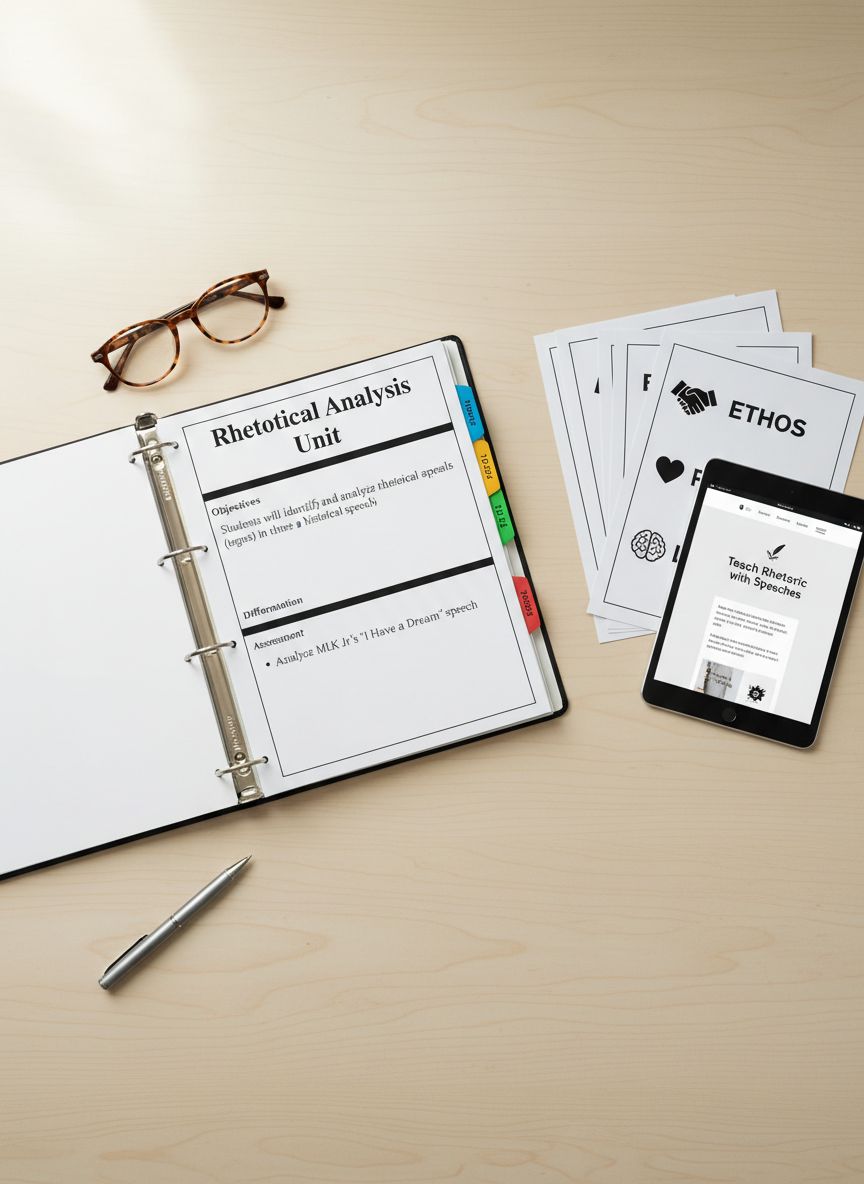
An organized lesson-planning workspace featuring an open binder labeled “Rhetorical Analysis Unit” with tabbed sections for different grade levels. Inside, a visible page shows a clearly formatted lesson plan for analyzing a notable speech, with headings like “Objectives,” “Activities,” and “Assessment.” Next to the binder, printed graphic organizers for ethos, pathos, and logos are stacked neatly, each with clean, bold icons. A slim tablet displays a website homepage titled “Teach Rhetoric with Speeches.” The desk surface is clean, light wood, with a single pen and a pair of reading glasses resting nearby. Soft, indirect daylight from off-frame creates a calm, professional atmosphere. Photographic realism, shot overhead for a flat-lay composition, emphasizing organization and clarity.

Differentiated handouts, annotation guides, rubrics, and extension projects ready to plug into your existing ELA curriculum.

About

Browse Lessons by Rhetorical Focus

Quickly find the right speech-based lesson for your students. Filter collections by grade band, standard, or rhetorical skill—like ethos, tone, or argument structure. Each set includes multiple activities so you can revisit a speech for close reading, discussion, and writing throughout a unit.

Contact

Ask for custom activities, request new speeches, or share skills your students need more practice with.

Use the form below

← Back

Thank you for your response. ✨

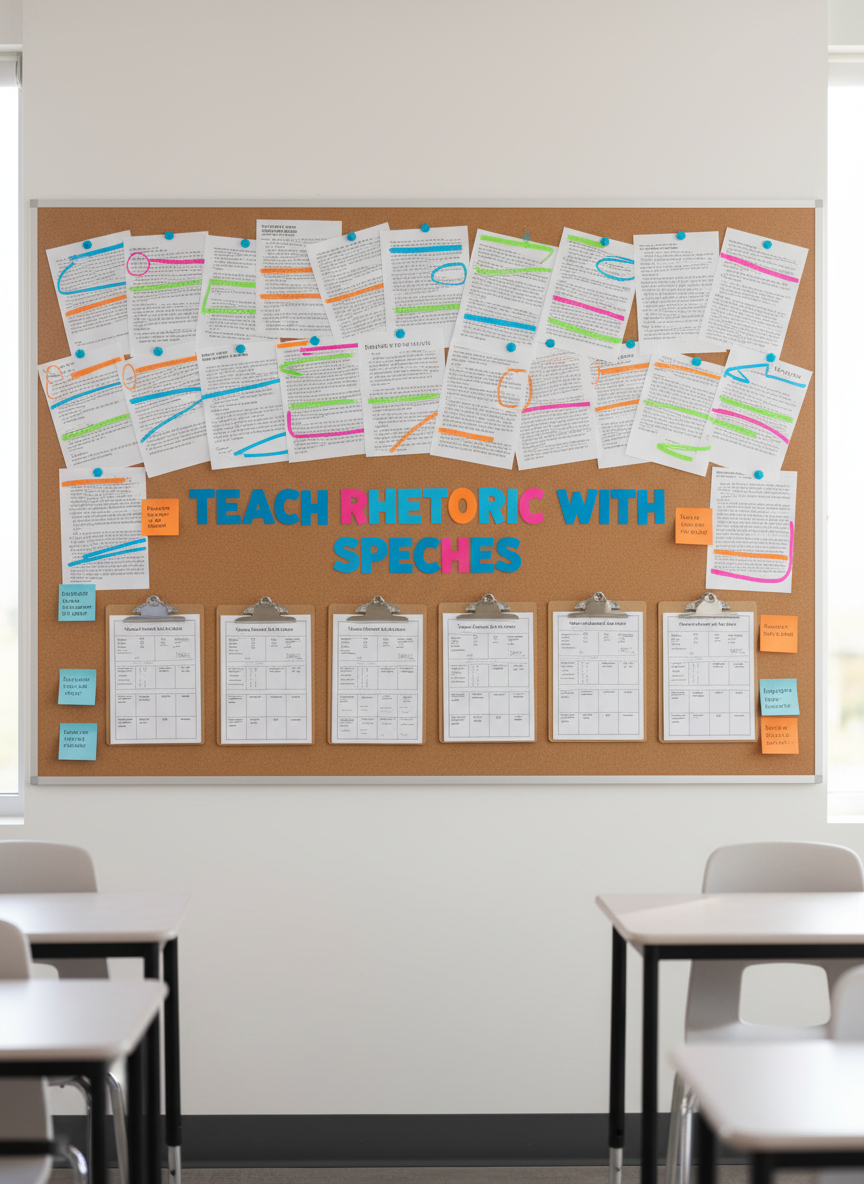
A large bulletin board in a bright, modern classroom, meticulously covered with printed excerpts from famous speeches, each highlighted in different fluorescent colors to mark metaphors, repetition, and parallel structure. Beside each excerpt, color-coded sticky notes explain the rhetorical devices in clear, typed labels. A bold central title reads “Teach Rhetoric with Speeches” in cut-out letters. Below, neatly arranged clipboards hold printed student activities and graphic organizers. Natural afternoon light from unseen windows illuminates the board evenly, enhancing the vivid colors. Shot straight on with photographic realism, balanced composition, and sharp detail, the atmosphere is organized, professional, and inviting for middle and high school learners.
Is this your new site? Log in to activate admin features and dismiss this message
Log In